Air Hockey Challenge
- 4.2
- Rating
- 50.00M
- Installs
- Free
- Price
 Analysis by App-foxy
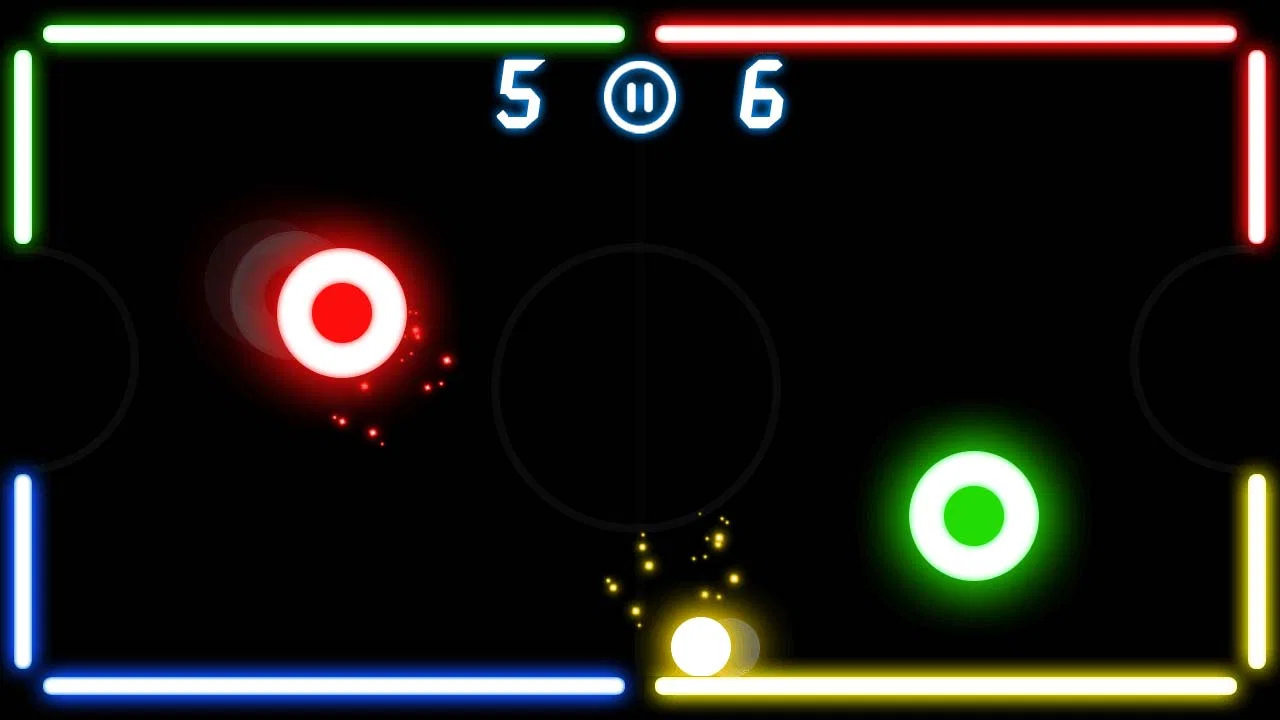
I approached Air Hockey Challenge as the kind of game you open when you want a quick sports match rather than a long campaign. Its idea is immediately familiar: guide the striker, return the puck, and try to send it past the other player’s goal. That simplicity is the main attraction, but it also means the game has to make every short session feel responsive and worthwhile. In my experience, it succeeds best when I treat it as a focused reflex game, not as a full simulation of table air hockey.
Developed by mobirix, this free sports game is suitable for Everyone and runs on Android devices using version 6.0 or later. It has reached over 50 million installs, with an average rating of 4.2 from around 223 thousand ratings. Those figures suggest that its straightforward format has found a broad audience, but they do not remove the more important question: does this particular style of air hockey fit the way you want to play?
How I Decided Whether It Was Worth Keeping Installed
My first test was simple. I wanted to see whether I could start a match without learning a complicated control scheme, understand what was happening immediately, and finish a round without feeling that the game demanded a large time commitment. Air hockey is naturally suited to mobile play because the objective is visible at once and the action does not require a long explanation. That makes this a useful choice for a short break, a waiting room, or a few minutes before bed.
You May Also Like

 Google Keep - Notes and lists
Google Keep’s Quiet Growth Shows the Appeal of Simpler Notes
As mobile work gets busier, Google Keep keeps winning a simple contest: capture a thought quickly, find it later, and get on with the day.

 Blood Strike: 2.5 Anniversary
Blood Strike’s Loadouts Turn Every Drop Into a Tactical Gamble
A close look at Blood Strike’s custom loadouts: how fast access to signature weapons reshapes its battle royale rhythm, rewards preparation, and narrows the gap between fights.

 Pandora - Music & Podcasts
Pandora’s Music Is Easy to Start, but Harder to Recover
Pandora’s strength is its low-effort path from a seed to a station. Its weak spot is how much confidence it asks you to place in connection, setup, and quiet recovery.

 8 Ball Pool
 Is Built on Rivalries, Rematches, and Routine
A close look at the rivalries, rematches, shared routines, and unanswered safety questions that turn a quick pool match into a persistent mobile community.

 Samsung Music
’s Quiet Strength Is Playing What You Already Own
Its reach comes less from spectacle than from dependable access to a personal library. That simplicity is both the app’s strongest retention engine and its ceiling.

 AccuWeather: Weather Radar
AccuWeather Review: A Quick, Clear Forecast for Everyday Decisions
For everyday plans, the best forecast is the one you can understand quickly. AccuWeather makes rain timing, radar, and local conditions easy to act on, with a few trade-offs.
More From Our News Desk



The more revealing test was whether the basic interaction stayed interesting after the novelty wore off. With a game built around one puck, two goals, and rapid returns, small decisions matter. I found myself paying attention to positioning rather than simply chasing the puck. Moving too far can leave the goal exposed, while reacting too late turns a manageable return into a conceded point. That balance gives the game more substance than the short store summary suggests.
I also considered how much variety a player actually needs. Some mobile sports games depend on career progression, licensed teams, elaborate customization, or a large collection of modes. Air Hockey Challenge takes a much narrower route. Its appeal comes from the match itself, so it is a better fit for someone who values immediate play over a large menu of activities. If you want a game that constantly introduces new systems, this may feel limited rather quickly.
The control question matters more than the graphics
For this type of game, touch response is more important than visual decoration. I focus on whether my finger movement feels connected to the striker and whether I can make a small correction without losing control. That is especially important when the puck rebounds quickly. A control system can be easy to understand and still feel imprecise if the movement does not match the player’s intention.
My practical advice is to begin with deliberate movements instead of dragging rapidly from side to side. Staying near the center of your defensive area gives you more time to react and reduces the chance of abandoning the goal while trying to attack. Once the return feels predictable, I start using angled positioning to send the puck away from the opponent’s most convenient line. This is a small change, but it makes the game feel more tactical.
Screen size also changes the experience. On a larger phone, the play area is easier to read and my hand blocks less of the action. On a smaller display, the same simple controls can feel more cramped, especially during quick exchanges. I would not reject the game solely for that reason, but anyone with a compact screen should expect to spend a few matches adjusting finger placement.
What makes the short-session format work
The strongest use case is the unplanned session. I can open it when I have only a little free time, play a match, and put it away without needing to remember a complicated storyline or prepare a team. That makes it different from sports titles designed around long-term management. There is no need to study a large rulebook before the first attempt; the puck and goal communicate the objective instantly.
One realistic example is a commute with a few spare minutes between connections. I would rather play something that gives me a complete burst of interaction than start a larger game that expects me to continue later. The focused format works well here because the player’s attention stays on positioning and timing. It is also suitable for sharing a device with a friend who has never played it, since the basic goal can be demonstrated almost immediately.
At the same time, the short-session strength can become a weakness. If I am looking for a relaxing game with exploration, collection, or a sense of building toward a larger objective, a quick air hockey match does not provide that same kind of reward. It is closer to practicing a compact skill than progressing through a broad sports world. That distinction should guide the download decision more than the category label alone.
Small tactical habits that improve the experience
The first useful habit is to defend before attacking. New players often follow the puck aggressively, but that can create an open path to the goal. I get better results by keeping the striker between the puck and the net whenever possible. This does not guarantee a save, yet it gives me a more stable starting position for the next exchange.
The second is to watch the angle of the return rather than its speed alone. A direct shot can be easy for the opponent to meet if it travels toward the center. A return aimed toward an edge can force a less comfortable response, although it also carries more risk if the angle is poorly judged. I treat this as a trade-off: safe central play is useful while learning, while controlled angles become more valuable once the basic movement feels natural.
The third is to avoid making every movement at maximum speed. Rapid swipes may feel energetic, but they can make it harder to stop the striker where I need it. Shorter movements help me maintain a defensive line and react to rebounds. This is one of the less obvious lessons of a simple air hockey game: precision often matters more than frantic activity.
These habits are also a good way to tell whether the game suits you. If you enjoy improving through timing and positioning, its minimal rules leave room for personal technique. If you prefer unlocking abilities or changing the way a character plays, the same minimalism may feel like a lack of depth.
Where It Wins, Where Other Choices Fit Better, and What Switching Means
I look at this section through a practical question: what kind of player is likely to keep choosing this quick air hockey match once its first-day novelty has passed? I’ll weigh its focused reflex play against sports games that offer longer progression, then consider what you gain and give up if you switch. That distinction matters more than simply choosing the most popular option.
The clearest strengths of this particular game
Its biggest advantage is accessibility. The concept is familiar, the objective is visible, and the match structure is easy to understand without a lengthy tutorial. That makes it a sensible recommendation for casual players, younger users within the Everyone rating, and anyone who wants a sports game that does not require a serious time investment.
It also wins when the player wants a game that can be judged quickly. I do not need to commit to a complex progression system to discover whether the core action is enjoyable. Within a few exchanges, I know whether the touch movement, puck timing, and defensive positioning feel comfortable on my device. That low commitment is valuable when choosing from a crowded mobile sports category.
The game’s popularity is another practical sign of its reach. With more than 50 million installs and around 2.9 thousand written reviews, it is not an obscure experiment with a tiny audience. I would still make my own decision based on play style, but the size of its audience makes it easier to view the game as an established casual option rather than a temporary novelty.
Its current version is 1.1.5, and the relatively modest technical requirement of Android 6.0 or later makes it approachable for people using older compatible devices. That does not automatically promise identical performance on every phone, but it does support the game’s role as an easy entry point. Players who do not own a recent flagship handset have a reasonable chance of considering it without treating hardware as the main part of the decision.
When a different sports game is the better choice
I would look elsewhere if my priority were a deep career structure. Games built around seasons, team management, player development, or extended campaigns are better for someone who wants a long-term project. Air Hockey Challenge is not the choice I would make when I want to feel that each session changes a larger sporting journey.
I would also choose another category if I wanted realistic simulation. The appeal here is the clean, immediate contest, not the recreation of every detail associated with a physical air hockey table. A simulation-focused player may prefer a title that emphasizes realism, while someone who wants quick reactions may appreciate this game’s simpler approach. Neither preference is wrong; they lead to different recommendations.
Competitive players should think about the kind of competition they want. A compact air hockey game can sharpen reactions and invite repeated attempts, but it may not satisfy someone searching for a large multiplayer community, organized competition, or a broad ranking ecosystem. I would not assume that a high install count means the exact social or competitive structure I want. The game is strongest as direct, self-contained play.
There is also the issue of repetition. Because the central interaction remains focused on returning the puck and protecting the goal, players who need constant novelty may reach their limit. I enjoy repeating a simple challenge when I can feel my positioning improve. If improvement through repetition does not motivate you, the game’s narrow concept may become familiar too soon.
Free to start, but consider the purchase range
The game is free to download, which makes trying it low-risk. That matters for a simple sports title because the first few matches reveal most of the basic appeal. You can decide whether the controls and pace suit you before spending anything. I consider that a meaningful advantage over games that require an upfront purchase before you know whether their handling feels comfortable.
There are in-app purchases ranging from $0.99 to $99.99 per item. That broad range is worth keeping in mind even if you intend to play casually. My recommendation is to treat the free experience as the test: first decide whether the core matches hold your attention, then consider whether any optional purchase genuinely improves your enjoyment. Do not spend simply because the game is easy to start or because a short session makes another attempt feel tempting.
The cost of switching away is low in one sense: air hockey is an easy concept to find elsewhere, and learning the basic idea does not lock you into a complicated system. However, switching can still mean giving up the particular touch feel you have become used to. If your main issue is control comfort, trying another game may help. If your issue is that you want more modes or progression, switching categories entirely is likely to be more effective than searching for a nearly identical table.
I would also avoid judging the game solely by whether it replaces a physical table. A real table offers tactile feedback, shared space, and a social atmosphere that a phone cannot reproduce. This mobile version makes sense when convenience matters more than physical presence. It is a pocket-sized alternative for a quick contest, not a complete substitute for playing with someone across an actual table.
Who should install it and who should skip it
I recommend it to players who want a free, approachable sports game for short bursts. It is especially suitable if you enjoy reflex challenges, prefer rules that can be understood immediately, and are happy to improve through repeated positioning and timing. It can also work well as a casual introduction to mobile sports games because the learning curve begins with a familiar objective rather than a complicated control system.
I would be more cautious about recommending it to players who need a strong sense of progression. If your ideal game includes a story, extensive customization, team building, or a constantly changing set of objectives, this focused format may not give you enough reasons to return. I would also suggest skipping it if you dislike touch-based precision or if you are mainly looking for a social experience built around a large online community.
For families, the Everyone rating makes it an approachable option to consider, but I would still pay attention to how in-app purchases are handled on the device. The age rating describes suitability, not personal spending habits. If a child will use the game, I prefer setting clear purchase controls before handing over the phone, particularly because the available item prices extend from small amounts to a much higher maximum.
My recommendation after using it as a decision guide
Choose Air Hockey Challenge when you want immediate sports action, not a full sports-management experience. Its best qualities are the familiar objective, the compact sessions, and the opportunity to improve through small decisions about defense, angles, and timing. I can recommend it to a friend who wants something easy to start during spare moments and who does not need a large progression system to stay interested.
My final view is positive but specific. I would install it for quick reflex practice, casual matches, and a low-commitment sports game that works on older compatible Android devices. I would not present it as the definitive choice for simulation fans, long-term career players, or people who need extensive social features. The 4.2 average from a large audience reflects broad appeal, but the right decision still depends on whether a concentrated air hockey challenge is what you want today.
If you approach it with that expectation, the game is easy to evaluate fairly. Start with careful defensive movement, learn how your finger position affects the striker, and see whether angled returns make the exchanges more satisfying. If those small improvements keep you engaged, the free download has a clear purpose. If they do not, switching to a deeper sports game is not a failure of the app; it simply means your preferred kind of competition lies elsewhere.
FAQs for Air Hockey Challenge
01What are the main features of Air Hockey Challenge?
Air Hockey Challenge offers an immersive experience with realistic puck physics and intuitive touch controls. Players can enjoy various game modes, including single-player and multiplayer. The app also features customizable tables and pucks, dynamic sound effects, and challenging AI opponents to keep the gameplay engaging.
02Is Air Hockey Challenge free to download and play?
Air Hockey Challenge is free to download and offers a basic gaming experience without any cost. However, it includes in-app purchases for unlocking premium features, such as additional game modes, exclusive table designs, and ad removal options to enhance the overall experience.
03How does the multiplayer mode work in Air Hockey Challenge?
The multiplayer mode in Air Hockey Challenge allows players to compete against friends or other players online. You can connect via local Wi-Fi or Bluetooth for face-to-face matches, or use the online matchmaking system to challenge opponents from around the world, providing an exciting and competitive experience.
04What devices are compatible with Air Hockey Challenge?
Air Hockey Challenge is compatible with most iOS and Android devices, including smartphones and tablets. It requires iOS 10.0 or later for Apple devices and Android 5.0 or higher for Android devices, ensuring a wide range of compatibility across different models and brands.
05Are there any ads in Air Hockey Challenge?
Yes, Air Hockey Challenge includes ads to support the free version of the app. These can appear between games or as banner ads during gameplay. Users have the option to remove ads by purchasing the ad-free version or subscribing to premium features, allowing for an uninterrupted gaming experience.
Pros
- Smooth and responsive gameplay controls.
- Realistic sound effects enhance experience.
- Multiple difficulty levels for all players.
- Local multiplayer mode for friends.
- Minimal ads for uninterrupted play.
Cons
- Limited customization options for tables.
- Occasional lag in online multiplayer.
- Graphics could be more polished.
- No tutorial for beginners.
- In-app purchases for advanced features.

Air Hockey Challenge
Gallery